A representative of Ilêwasi reflects on the challenges and opportunities of digital environments for children and adolescents and makes the case for listening to their voices to build more effective public policy.
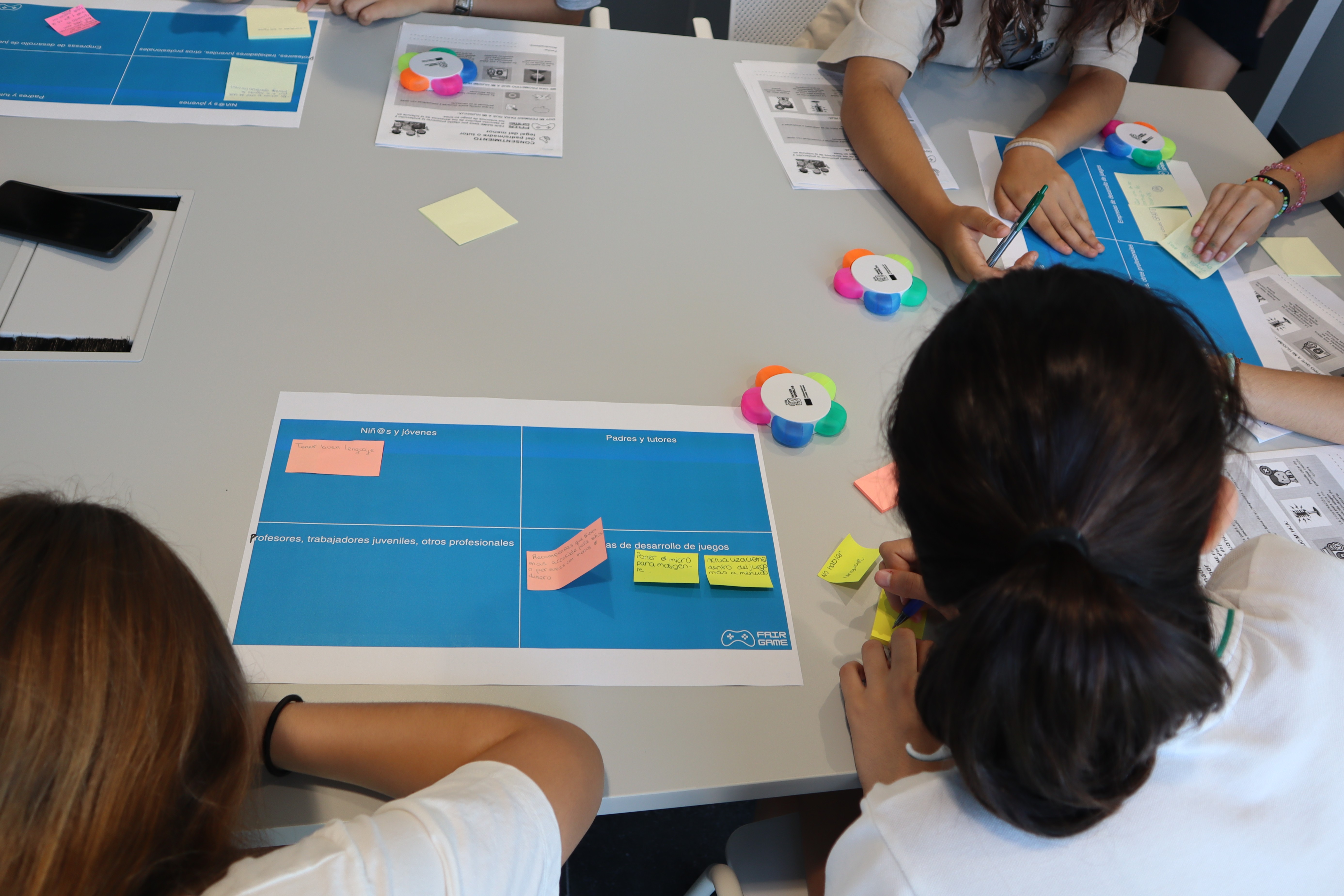
The digital transformation is reshaping the way children and adolescents learn, participate, and connect with one another. Against this backdrop, we spoke with Génesis S. Sira Bracho, community psychologist and project officer at the NGO Ilêwasi, an organisation with over fifteen years of experience defending children’s rights and a partner in the FAIR GAME project, an initiative that promotes children’s participation to build digital environments that are safer, more inclusive, and more respectful of their rights.
— Ilêwasi has been working to defend children’s rights for many years. What projects is the organisation currently developing?
Ilêwasi is a Non-Governmental Development Organisation (NGDO). We currently work across a range of projects aimed at defending, promoting, and researching the right to education for children and adolescents. We began years ago with global citizenship education initiatives, but we have gradually expanded our work to include social action projects in different neighbourhoods and schools, always guided by a rights-based, inclusion-focused approach.
— Génesis, after more than fifteen years working with children and adolescents, what do you see as the main challenges they face in digital environments?
It’s an interesting question, because throughout this experience, we’ve seen that every year brings new challenges. The issues and the opportunities are constantly shifting. What we do consistently identify is the importance of working on coexistence within digital environments as well. The same dynamics we observe in physical spaces, such as difficulties resolving conflict, also appear online and often transfer from one space to the other.
— When we talk about video games or the internet, we tend to focus on the risks. Are we paying enough attention to the opportunities they offer for learning, participation, and inclusion?
The activity you carried out with us made me think a great deal about this. During the lockdown, some students who had struggled with peer conflicts actually improved their academic performance precisely because the digital environment allowed them to step away from the physical spaces they didn’t feel safe in. They were able to begin building different kinds of connections. When that is later balanced with in-person activities, the results can be very positive for developing their social skills.
“During COVID, we witnessed something paradoxical: digital spaces helped students who were experiencing bullying, because their physical spaces were not safe spaces for them.”
— What motivated you to join the FAIR GAME project?
There were several reasons. First and foremost, the community-centred approach: the idea that children and adolescents themselves can take ownership of these spaces. But also because we are aware that we need to adapt to the world as it is. Digital skills are featured in many types of projects today, and they are essential for addressing contemporary challenges. FAIR GAME felt like exactly the right fit for today’s reality: a digital initiative oriented towards the positive, well-structured, and with a genuinely participatory approach. We look forward to continuing to work together.
— At FAIR GAME we champion the active participation of children and adolescents in the decisions that affect them. Why do you think listening to their voices matters when it comes to video games and digital environments?
Because the reality today for adults as much as for young people is that our lives are hybrid. We have a great deal of digital life, even if we sometimes prefer not to acknowledge it: we socialise through it, we are shaped by it, we absorb behavioural patterns from it. That is why responsible engagement with these spaces is so fundamental.
If we don’t understand the dynamics inside video games, we can’t offer young people healthy ways to navigate them. And because this is something they experience so intensely, we have found that they have a great deal to say, and they want to say it. We’ve seen it ourselves: when they are invited to participate, they show up.
— If you could send one message to policymakers and technology companies about children’s digital rights, what would it be?
I think it is very positive that initiatives and regulations exist to promote digital education but those policies need to be continuously updated to respond to emerging challenges. For example, if we identify problems related to device addiction, we need to develop strategies that encourage healthy technology use rather than reinforcing dynamics that deepen that dependency.
I also think it’s important to listen more closely to those who work directly with children and adolescents. Well-intentioned policies sometimes meet very different realities on the ground, and professionals need practical tools to find a workable balance.
“In the end, that is the keyword: balance. It’s not about rejecting technology or promoting unlimited use, it’s about finding ways to harness its full educational and social potential without losing sight of children’s wellbeing.”
About Ilêwasi
ILÊ means ‘house’ in Yoruba, and WASI means ‘house’ in Quechua, a fusion of Latin America and Africa. Ilêwasi is a home for children and adolescents around the world: the place where rights are upheld.
Take a look to their website! ILEWASI